
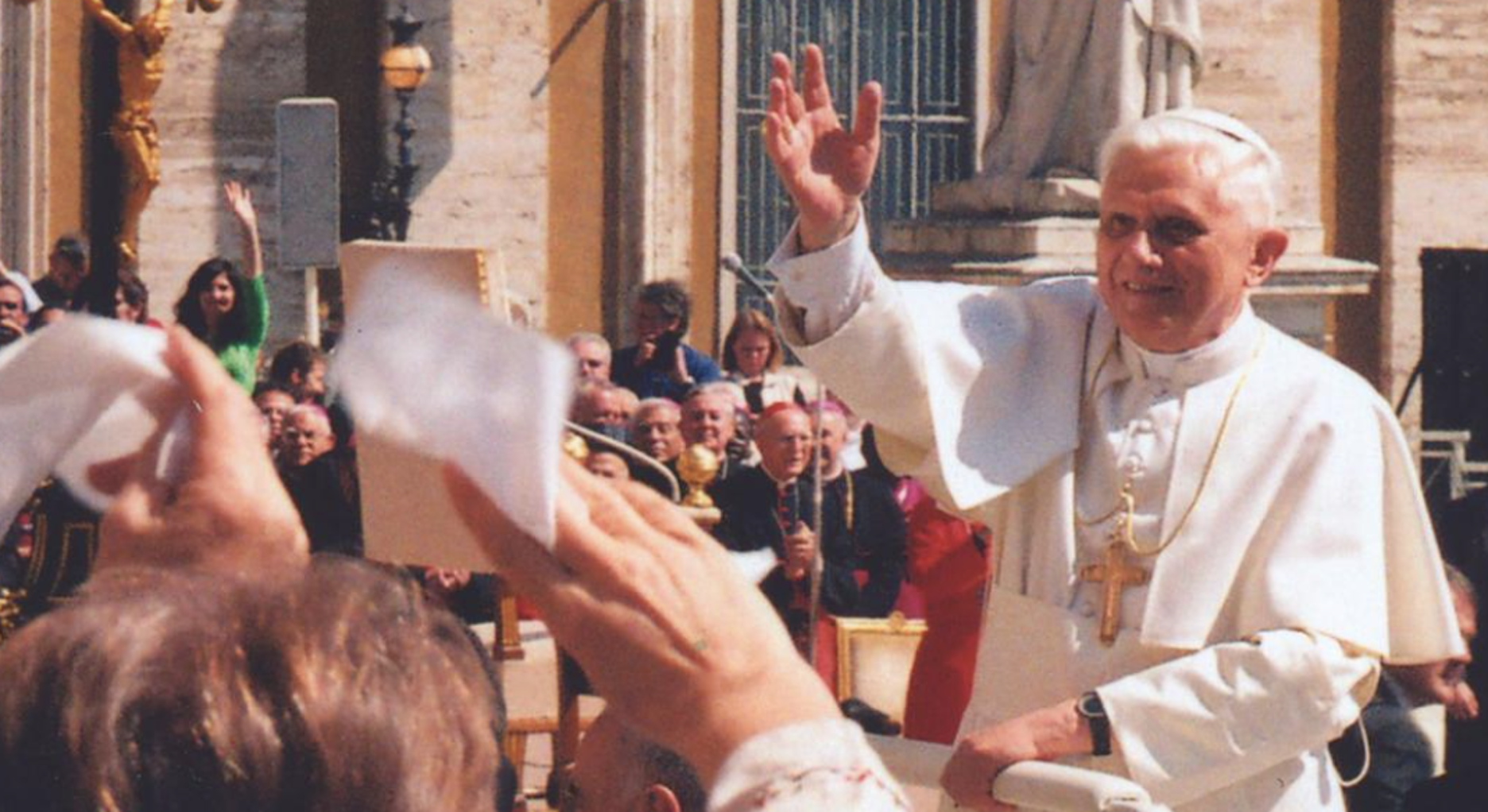
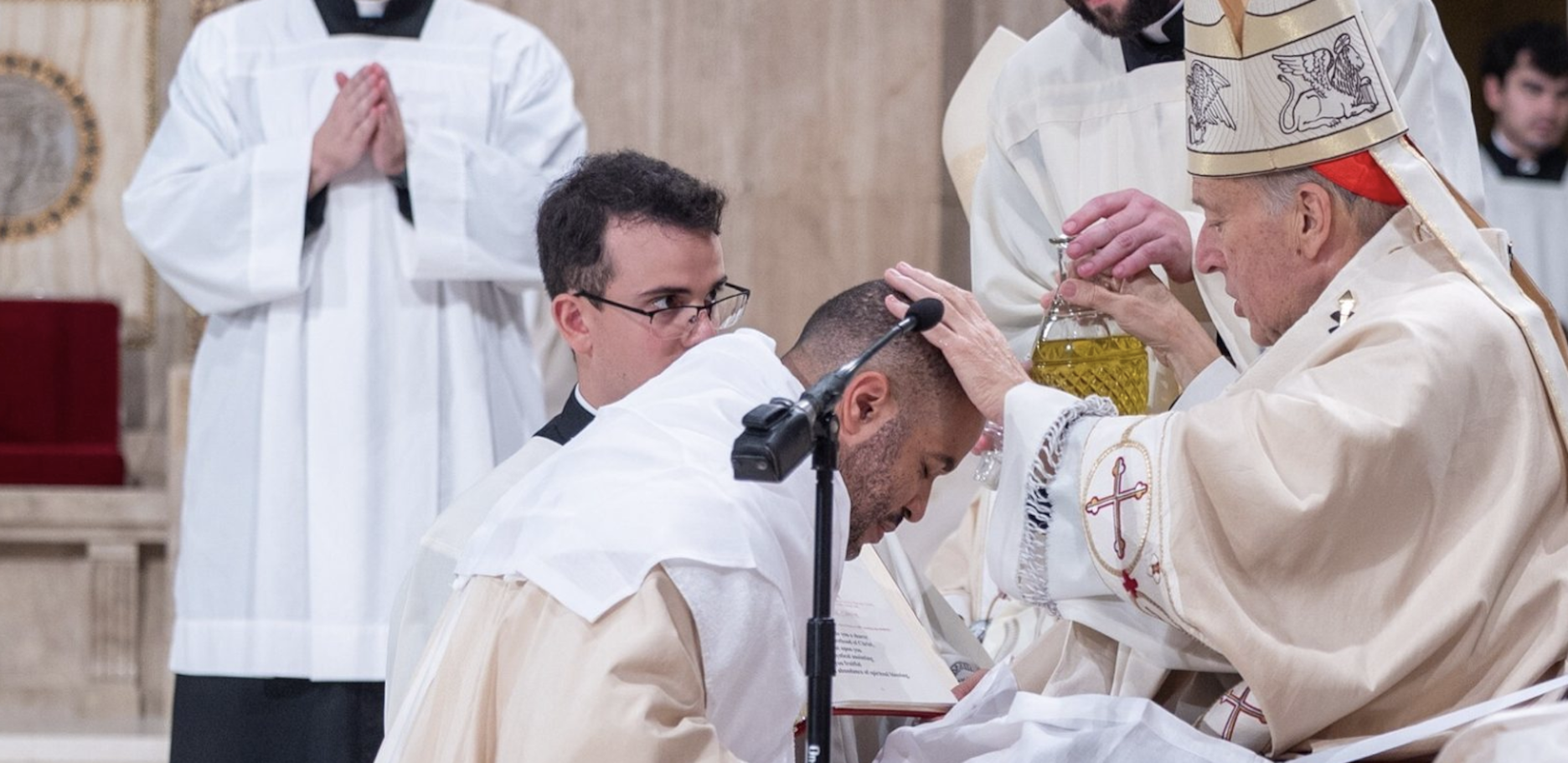
Having been involved in church life for a very long time now, when I think about these last couple of decades, it’s very clear to me that there was more unity in the Church when we were living under Summorum Pontificum than we are now recently under Traditionis Custodes.
I’m old enough to remember when the liturgy wars were raging after the Second Vatican Council and people were being judged and stereotyped depending on what their liturgical leanings were. That raged for a long time well into the 1990s.
I recall that things began to mellow a bit after John Paul allowed the indult, and then under Summorum Pontificum we came to a certain peaceful, at least peaceful coexistence. People were [not] judging harshly those who had different styles of worship. To me, it seemed we were living with a greater degree of harmony with those who preferred a more traditional style of worship or those who preferred a more contemporary style of worship.
I believe Pope Benedict was very wise in the vision that he had. He understood the rupture that had taken place. He lived through it. He saw how the faith of Catholics was very seriously challenged, damaged, I’ve heard of cases even destroyed, because of very quick, radical changes in the way the liturgy was carried out. And he saw that we needed to somehow come to what he called this internal reconciliation with the Church’s forms of worship.
I believe his vision was that with both forms of the Mass — he came up with this idea of Ordinary and Extraordinary Forms. That is, the way the Missal issued by Pope Paul VI after the Second Vatican Council, how the form of the Mass that we have today and the Missal as it was issued right before the Second Vatican Council. If both forms of worship, both Missals, forms of the Mass are celebrated and they both are familiar and comfortable with Catholics, they can comfortably worship in both forms of the Mass, that there will eventually be an organic convergence of the church’s worship.
He understood that it would be a mistake to repeat that idea of forming a committee to design a Missal. The mistake would be — there may be a desire for some kind of convergence between the two forms, but the way to do it is not to get a committee of scholars to sit down and draft a liturgy. It has to happen organically. Pope Benedict understood that this would take a long time — generations, maybe even centuries — with people worshipping with both forms of the Mass to come to a unified worship in the church.
I do believe that, and I’ve seen that certainly after the Second Vatican Council, people attached more to the traditional way of worship have been stigmatized and marginalized in the church. And I think that foments division. Some people felt alienated from the church. I fear that that might begin to happen again.
I recall, you know, Pope John XXIII‘s speech opening the Second Vatican Council, that the church now prefers the medicine of compassion and mercy rather than taking up the weapons of punishment.
And so I think he said this especially with regard to those who are not of the family of faith that we are, perhaps feel alienated from the church, that we reach out to them with patience and understanding. I think the vision of St. John XXIII needs to be applied as well to the times in which we are living, that we can try to deal with each other with greater understanding, so we can live with a peaceful harmony, and respecting people’s desire for—we must, we have to admit, we have different styles of worship in the church now. There is a certain degree of latitude for that. We have to respect people’s desire for that.
Some people are fed by some styles of worship or traditions within the church, others perhaps by some other traditions. So long as we are all in conformity with the liturgical guidelines of the church and what the church expects of us, I think we need to respect that and allow us to move forward using everything that works to bring souls to Christ.
We see there are different ecclesial movements. There’s a revival of Catholic tradition. These are all different movements within the church that are reaching some people or others. But what is important is what is working. Let’s keep focusing on what is working, because the ultimate point of it all is to bring souls to Christ so that they might know His love and His salvation and come to share life with Him forever in heaven.
Transcribed from a YouTube video of San Francisco’s Archbishop Cordileone by Tribune Chrétienne (2026, October 8)
Watch Archbishop Cordileone here.
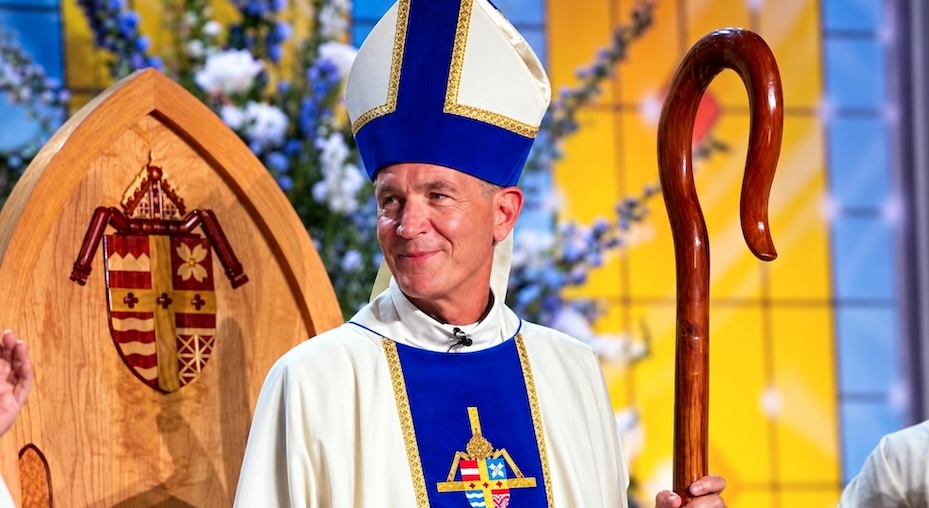
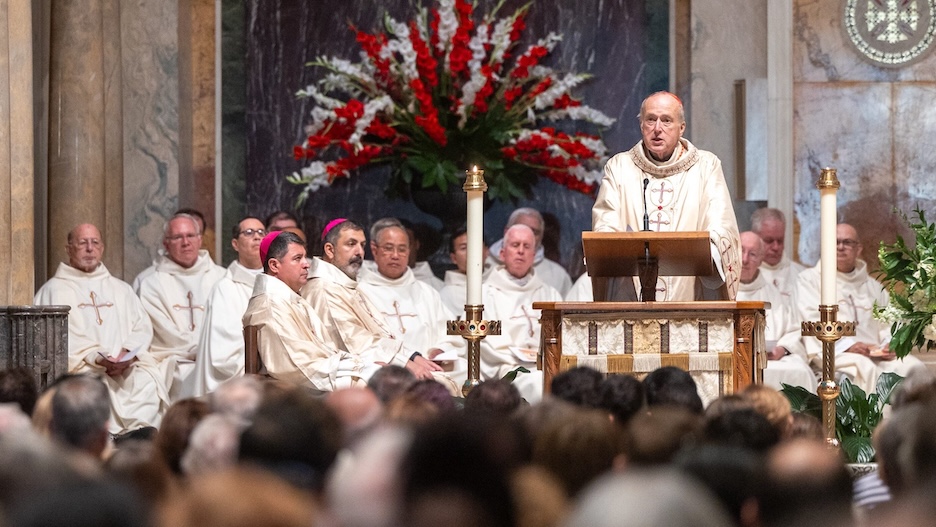

“But what is important is what is working.” I recall those who prefer the Old Mass saying it was a more prayerful experience than the New Mass and better met their spiritual needs. Pope Francis consigned such honest seekers of God to the garbage heep, just as he ran roughshod over the underground Church in China. Diane Montagna convinced me Francis’ survey of the world’s bishops was fraudulantly conducted. I believe it is time to admit that Summorum Pontificum was working and to let the charity of Benedict triumph over the harsh judgmentalism of Francis. God forgive me if I am in error, but I stand with Archbishop Cordileone.
Hear, Hear!!!!
Excellent. I enjoyed watching the two videos. God bless Abp. Cordileone.
There wasn’t unity; there was the illusion of unity.
Trad Catholics don’t want to accept Vatican II, which is why they don’t accept Vatican II’s liturgical reforms.
But you can’t reject Vatican II and be a Catholic.
When the former liturgy was allowed under Summorum Pontificum, it gave the illusion of unity whereby people who rejected Vatican II got to pretend they were in union with the post-Vatican II Church, and there was detente, not unity, as long as the trads got to enjoy their older liturgical form.
When Pope Francis realized that allowing the former liturgy to continue was fomenting enclaves of resistance to Vatican II, he wisely abrogated Summorum Pontificum and insisted that the Roman Church be truly unified in liturgical form as well as in faith, and that accepting Vatican II and its reforms was non-negotiable for Catholics.
Forcing billions of Catholics to worship only “my way,” publicly despising sacred Catholic traditions of 2,000 years– is certainly not “unifying.” It is evil, dictatorial, ignorant and divisive. Pope Benedict was a world-class theologian, one of the finest of the 20th century. He was a far better Pope, too. There is also no possible “unity” for Catholics in Pope Francis’ Pachamama rituals and the new Mayan Missal and Mass.
“But you can’t reject Vatican II and be a Catholic.” But one can be critical of Vatican II and its implementation. Much poisonous fruit has come from this council. You, alien, might want to ask why.
to 👽 – Your grandparents would disagree with you.
Alien, surely you know, Pope Francis was a very confused pope, and he was also lied to, by prelates trying to “put one over” on the pope, for their own selfish interests. Yes, clerics of all types do lie and do commit sins at times. Psychologist Richard Sipe knew all about that, in his clinical work.
Glad to encourage many comments on Cal Catholic stories. Please keep your comments to 100 words or less, or you run the risk of them being trimmed back to 100 words.
But I assure you, my one hundred and first word through one hundred and twentieth word is SOLID GOLD!
Why don’t you fix the bug affecting viewability of posts already?
We all must pray for Pope Leo, as he is soon to undergo surgery for removal of a lung nodule.
🎵 What a fool believes he sees, no wise man has the power to reason away. 🎵
In Amarillo, Texans are in a troubling situation. The Mayor, Cole Stanley, and City Council, voted to approve a privately-funded monument of the Ten Commandments to be erected at City Hall. The monument was installed in May. Now, the Satanic Temple is petitioning to have a Satanic monument also installed there! The Satanic Temple is extremely evil and anti-Catholic. They desecrate Catholic churches, holy statues, Catholic sacraments and sacramentals, and steal consecrated Catholic Communion Hosts for use in their evil rites and rituals to honor Satan. If you want, you can contact the Mayor and City Council to ask that the Satanic Temple’s request be denied. Here is the info:
Mayor Cole Stanley, Direct Phone Number:
(806) 584-6175
Amarillo City Hall/Mayor and City Council Office
Phone Number: (806) 378-3014
Email Address: cole.stanley@amarillo.gov
Reply to Protest Satanic Temple monument: In the name of Jesus Satan begone!
The devil worshippers did propose placing a Baphomet statue in Amarillo, Texas, after the city approved a privately donated Ten Commandments monument for the southwest lawn of the City Hall. Their application has not been approved by the City Council. The Satanists are all hat and no cattle, at least here in Texas. That kinda stuff might happen in California, but isn’t likely to happen here. Bless their hearts.
Sorry Archbishop but let me make something clear to you: Traditionis Custodes unearthed the dissent that was going on under the surface in many of those who exclusively attend the Extraordinary Form. That was Pope Francis’ “¡Hagan lío!”
Those committee members entrusted by Pope Paul VI to craft the Missal named after him, did so with care, with knowledge, with insight, and yes, with love for the liturgy and the people of God. This was documented by Bugnini himself. If you just let the liturgy develop “organically”, you’ll get what Pope Benedict himself described as needless accretions in it overtime.
No, jon. Pope Benedict XVI was one of the finest theologians of the 20th cenrury. And Archbishop Cordileone is a very fine Catholic prelate. He knows the truth. All you have is your own made-up subjective biases. Archbishop Bugnini and his Consilium did not even try to read and follow what was carefully written up in “Sacrosanctum Concilium.” This remains one of the biggest, scandalous controversies in the history of Vatican II.
“No” is simply misguided. It is well-documented how the committees that finalized the liturgies after the Council did so with immense care. And guess what, Pope Paul VI was very involved in the liturgical decisions, every step of the way. People, this is all documented.
It is simply a myth that the revised liturgies were “contrary” to the Council, or that it they were hastily contrived. That’s bunk. Bunk!
I say the Ordinary Form Mass is well thought out: its order, its rubrics, are deliberate.
You people should stop denigrating the sacraments of the Church in the Ordinary Form.
Maybe jon likes the shallow “trendiness ” of today’s highly-secularized Catholic Church. Maybe he especially likes the “trendy” Synod on Synodality. But will jon be soon defending LBGT-oriented liturgies, gay unions, gay clerics, woman priestesses, and “Communion for all,” even those in irregular unions– etc.– if the Synod on Synodality changes Canon Law, and finds ways to change other things about the Church? Is jon really a blinded socialist “yes-man” to modernist “Papist trendiness?” Does he care who teaches his kids, at the parish school– and beyond?
It is well-known that Abp. Bugnini and his Consilium completely ignored “Sacrosanctum Concilium” and wrote up a noticeably ecumenical text– stripped of tons of Catholic elements– according to their own ideas for a new Catholic Mass. Many have pointed out the similarities in the text of
this new Mass to updated Protestant Eucharistic liturgies of the day. And strangely many Catholics today just like the Protestants do not believe in the Real Presence.
Well, if denigrating the Old Mass by saying stupid things like “the priests faced the wall” are not sacrilegious, how can criticizing the New Mass for its misuse be so? Just saying.
I was referring to some older priests, who should have known better, telling younger priests and laity that priests in the Traditional Mass “faced the wall” when serving Mass, when they knew quite well that Catholic priests faced Christ on the crucifix over the altar during the Consecration. It was always referred to as “Facing East” (ad orientem) which means facing Christ, who is both the Son of God and the Sun of God, Light of the World, when talking to him. Most early Churches faced literal East as God is referred to in the Old Testament as coming from the East in many passages, and the Messiah as coming through the Eastern Temple gate, and from the East at Second Coming.