
The year was 1985. A nun in a zip-up velour robe was demonstrating liturgical dance at my all-girls high school. Spotlighted onstage in the darkened auditorium, she swayed and bowed, long grey hair falling to her waist, feet bare. The performance was punctuated with mostly forgettable snippets of wisdom focused on Mother God and patriarchal structures.
But one unforgettable moment came at the end of her performance, when she asked, “What is God’s greatest gift to woman?” With one voice, my schoolmates shouted back, ‘MEN!’”
The same year, Donna Steichen sat demurely on the sidelines of a conference in Mankato, Minnesota, as women circled a smoking cauldron.
Many of the participants were current or former Catholic nuns. They had spent the weekend discussing women and spirituality; this service “in the Dianic Wiccan tradition” was a highlight of the event.
Never mind that the smoke rising from the cauldron was dry ice; the women were deadly serious as they invoked the four directions to send malevolent thoughts to Washington. Their object: to kill a certain bill that was making its way through Congress.
“Mom was sitting on the sidelines with her tape recorder and her notebook, writing down everything she was observing and hearing,” Steichen’s daughter Laura Berquist recalls. “The facilitator of the workshop was not happy. She came over to Mom and told her that everyone was required to participate.
“My mother smiled at her and said, ‘No, I am perfectly happy sitting right here watching.’ She stayed right where she was with her tape recorder on, and she went on taking notes. Mom was not a person who was intimidated.”
That incident, Berquist said, perfectly illustrates the feisty spirit that made her tiny, ladylike mother — who died Oct. 21 at 97 — a force to be reckoned with.
The 1991 book that came out of the Mankato conference and similar events was instrumental in exposing the radical feminist infiltration of the Catholic Church in America.
That infiltration was in full flower in the 1980s, when things were getting really weird at my high school, run by the Incarnate Word Sisters. When I read Steichen’s book a few years later, it put many things in perspective for me.
A mother of four from Minnesota, Steichen had been active in the pro-life movement, Catholic religious education, and other causes before a speech by Catholic feminist theologian Rosemary Radford Ruether impelled her to investigate what Berquist called “the heresy and malevolence” behind Ruether’s radical position.
A gifted artist, Steichen had realized early on that she could do one thing well, along with raising her children: paint or write. She decided she could do more for the Church by writing, so write she did, publishing in her diocesan newspaper and writing pro-life pamphlets. From 1980 to 1986, she served as vice-president and then president of the Catholic League in Minnesota. She also had a long-running local television program, which she used as a platform to defend life and discuss Catholic issues.
But Ruether’s keynote address at Minnesota’s International Women’s Year meeting in 1977 — explicitly identifying feminist theology as a branch of Marxist liberation theology — marked a new focus.
It led Steichen to devote a dozen years to researching and writing about feminism and, in particular, Catholic involvement in the feminist spirituality movement. In the process, she uncovered ties to Marxism, abortion, paganism, and the occult.
Her research culminated in Ungodly Rage: The Hidden Face of Catholic Feminism, published by Ignatius Press in 1991.
The book was “groundbreaking,” Berquist told me, “because it exposed the intention of the feminist movement to ‘defect in place’.”
“Mom was attending international woman’s year conferences, and she was dumbfounded to hear these various ladies say so explicitly that they were opposed to the Church and her doctrine, but that they would not leave the Church. Rather, they would try to dismantle her from within.”
Secular feminists had in large part become less strident by the 1980s, Steichen observed. But religious feminists — often well-funded by their religious orders — were a last holdout. They saw themselves as “change agents, engaged in a ‘long march through the institutions’” that [would] change the church to conform to their new vision,” Steichen wrote.
Steichen was careful to quote exact words and tried to back them up with written documentation that said the same thing. The radical feminists she was investigating “hated her,” Berquist remembers, but “they couldn’t do anything about it, because she was so careful about sticking to the observed facts and the written word.”
When she was refused entrance to conferences she was covering, Steichen took to wearing a wig and using her maiden name on her press badge.
She reported from the Mankato conference, “There were tee shirts and bumper stickers bearing the slogans ‘I (love) the Goddess’ and ‘Ankh if you love Isis.’” Elsewhere, she spotted “advertising buttons with such messages as ‘Nothin’ Says Lovin’ like Something From the Coven.’”
And “despite the unanimous denial of any association between witchcraft and satanism, an advertisement for a series of five ‘altar posters’ included two depicting ‘the God,’ a horned and bearded male figure indistinguishable from traditional images of Satan….”
Ungodly Rage was a surprise hit, and over the next 35 years, Steichen was a sought-after speaker on the international lecture circuit. She contributed to numerous publications, including Catholic World Report, Latin Mass, and LifeSite News.
She wrote and edited two more books, both published by Ignatius. 1999’s Prodigal Daughters: Catholic Women Come Home to the Church was a hope-filled follow-up to Ungodly Rage, with portraits of seventeen women of the Baby Boom generation who left and returned to the Church.
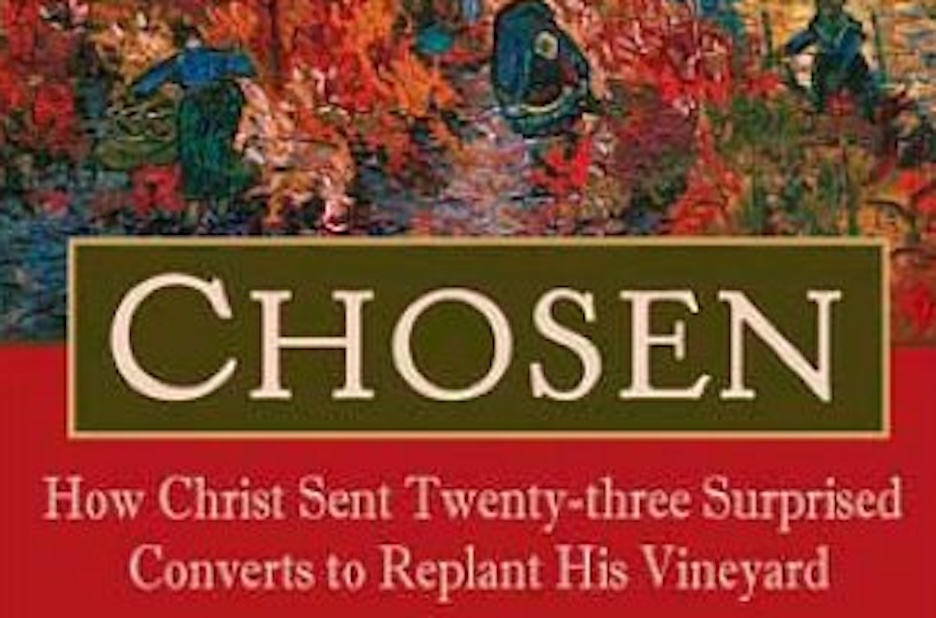
And 2009’s Chosen: How Christ Sent Twenty-Three Surprised Converts to Replant His Vineyard, included profiles of Elizabeth Fox-Genovese, Steven Mosher, and Joseph Pearce, among others….
She and her husband, LeRoy (who died in 2022 at age 99), were early supporters of Thomas Aquinas College in Santa Paula, California, sending their daughter Laura to the Great Books school when it opened in the fall of 1971. Ultimately, they would send three children and 15 grandchildren to the school, which currently counts two Steichen great-grandchildren as students. Son-in-law Paul O’Reilly currently heads the college….
Steichen became a fervent supporter of the homeschooling movement as well. She “kept suggesting to us that we homeschool our children,” Berquist wrote last year. “I am forever grateful to my mother for guiding us in that direction.”
Steichen wrote the introduction to Berquist’s Designing Your Own Classical Curriculum in 1994. The following year, Berquist founded Mother of Divine Grace homeschool, which would become a nationwide program to support homeschoolers with online classes, counselors, and lesson plans….
When Donna Steichen said her final goodbye last week, Regina Magazine commented simply, “A great woman has passed.”
By Monica Seeley in Catholic World Report


How time flies! I still have at least three of Donna Steichen’s books in my library. Some of which I read when they first came out.
May Donna and all the faithful departed, through the mercy of God, rest in peace.
May our sister Donna rest in the peace of Christ. I was privileged to meet her once many years ago. She had clarity and courage about revealing heretical things in the Church that some wanted kept hidden from many of the faithful.
Good premise, but there are a LOT of factual errors in that book unfortunately. May she rest in peace.
If there are a lot, might you identify a half dozen factual errors for us?
It’s easy to make anonymous claims. She put her name on the book.
All I know is that reading her books kept me out of a whole lot of trouble many times, just as the Bible stories of “Joseph and Potiphar’s Wife,” “David and Bathsheba,” “Suzanna and the Elders,” “Bel and the Dragon” and the “Woman at the Well” warn us to behave and what can happen to us if we do not. The story of Soroya M., a Muslim woman who was stoned to death for a crime she never committed, is also a warning to all mankind that God is just, and in the end will judge all accordingly.