

For nearly four weeks of Advent now, we have been preparing for this celebration of the great mystery of our faith of the coming of the Son of God into our world, the Incarnation of the Second Person of the Most Holy Trinity in our human flesh. We have been singing special Advent carols to mark the way (only now is the time, properly speaking, for Christmas carols!). Among the many that we love to sing, we sang the words: “People, look east, the time is near of the crowning of the year. Make your house fair as you are able, trim the hearth and set the table. People, look east and sing today: Love, the Guest, is on the way.”
While the melody of the carol comes from a traditional French carol, the words in English were written more recently, in the 1920’s, by the English hymnist and author Eleanor Farjeon. In these lyrics, Farjeon uses a different image in each stanza to address the themes of the Advent and Christmas seasons. Here in this first verse the image of looking east orients us toward the direction of the rising sun, that is, the source of light, the direction of the coming of the Messiah: he is the light of God coming into the world to dispel the darkness in this world.
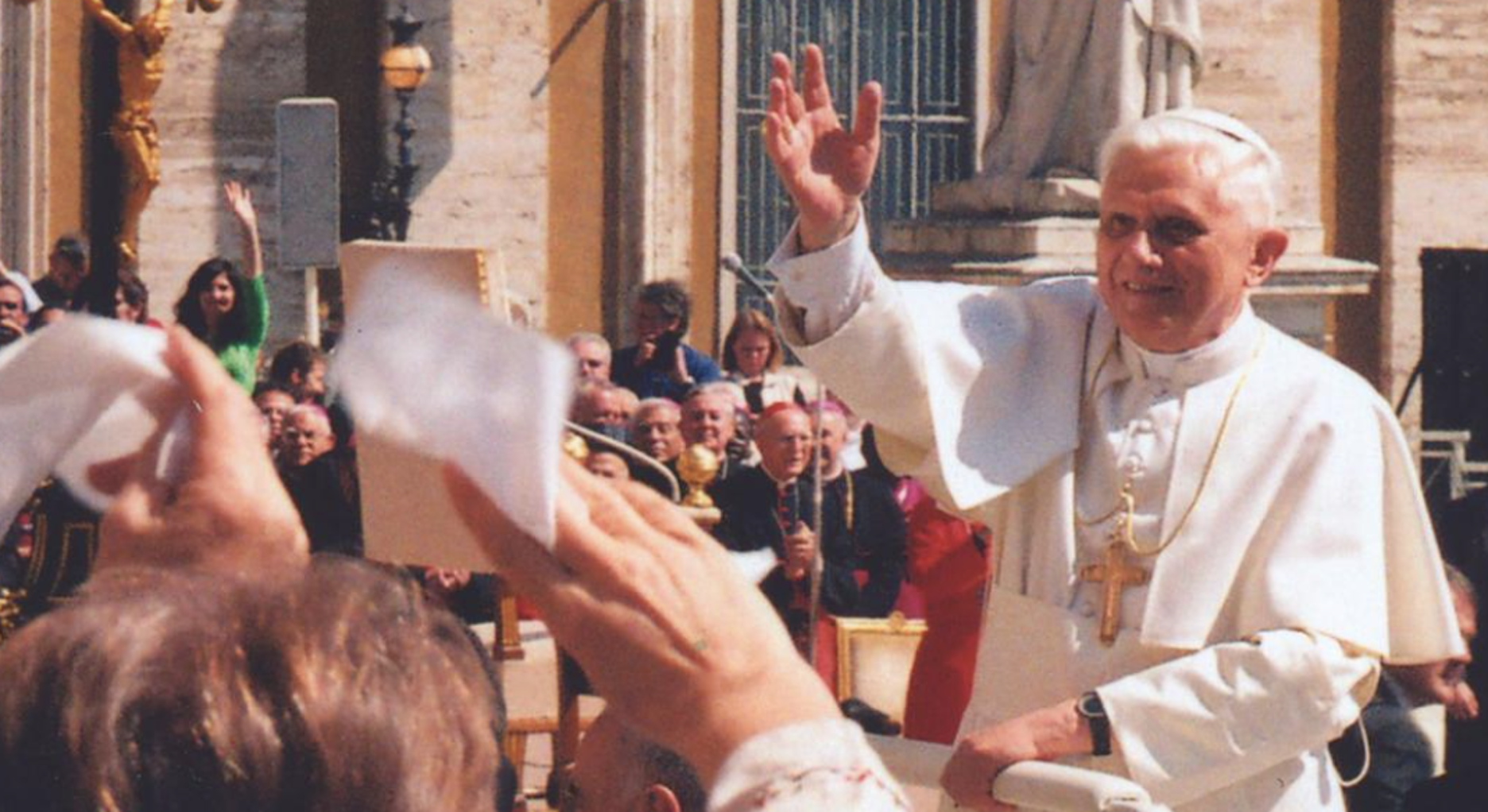
Christians from the very beginning have had this sensitivity of praying facing east, so much so that it endured for quite some time even within Protestant denominations. Farjeon was a Methodist. We can also think, for example, of the classic Negro spiritual Let Us Break Bread Together on Our Knees: “When I fall on my knees with my face to the rising sun, O Lord have mercy on me.” So deep in the Christian soul was this sensitivity of praying facing east in ancient times that, as Pope Benedict explained to us, Christians used to put a cross on the wall on the east side of their home in order to know toward which direction they should pray….
All of this is to remind us of where the source of our light comes from, or better yet, who that light is. There is much darkness in the world, and only he can cast it out. Such has it always been: “The people who walked in darkness have seen a great light; upon those who dwelt in the land of gloom a light has shone.” This prophecy from the prophet Isaiah we just heard proclaimed in the first reading for our Mass tonight came at a particular period of the history the ancient people of Israel, when they were suffering oppression from the kingdom of Assyria, their powerful neighbor to the east. It was understood at that time as a prophecy of liberation from this oppression: the destruction of the symbols of oppression – the yoke, the pole and the rod – meant liberation, being brought into the light of freedom.
This prophecy speaks of one form of darkness: political oppression. Sadly, it is a darkness common in every generation, and most especially our own, as everyone around the globe at this time senses a worrisome and urgent concern over wars that have broken out in Eastern Europe and the Near East and that are threatening in other parts of the world as well. Then there is the persecution of people because of their religious beliefs, and especially of Christians, all over the world: China, Nigeria, Ethiopia, Nicaragua, just to name a few. There is darkness that also takes the form of social oppression, the marginalization of people because of certain traits they have or ways of thinking that do not conform to the accepted social norm of those in power….
People look east: let us keep our eyes fixed on Christ. Do not divert your vision. Nothing else is worth it. It will only lead to mediocrity, loneliness, darkness. Live in his light, pleasing him in all things, and you will know what it is to be loved by him and to be loved in return. It is the one and only gift exchange that really matters!


And now nobody really cares anymore that it was Christmas a few days ago. Over and done. On to the next thing. People’s eyes have already been diverted. So much for that. This weekend’s Mass attendance will be only about half of what it was on Christmas in almost every Catholic church.
Here is the real, the Forever money maker: ” …. let us keep our eyes fixed on Christ. Do not divert your vision. Nothing else is worth it.”
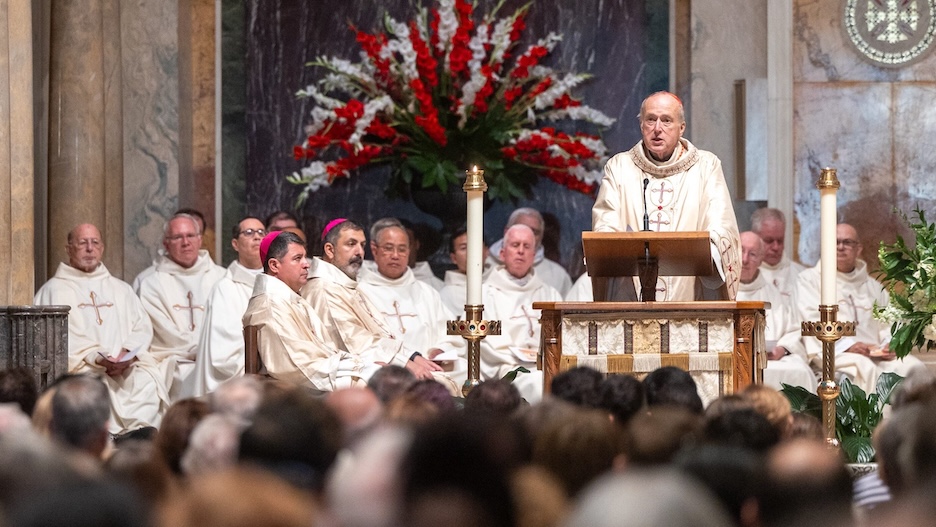
Thank you, Archbishop!
As a child I faced east automatically to say the Psalms, perhaps because the Psalms themselves mention God “riding in from the east” and hearing about Easter sunrise services.
We have had three deaths in our extended family this year, two very recently, so we did not get our outside nativity, nor a Christmas tree put up before our family dinner and gift giving. But happily, we can celebrate the birth of the Lord Jesus till Epiphany, so today I finally took out my Christmas cups. I might even put up part of our indoor nativity and leave out the wisemen and camels until then.
So sorry for your loss. You’re participating in an ancient Christian tradition, even if you did not plan to do so. And, Christians do pray facing East, ad orientem, as we await the Return of our Lord Jesus Christ. May He grant you His peace.
Let’s keep our Christmas decorations up, playing Christmas music and wishing one another Merry Christmas! Even though it’s counter-cultural, it’s a witness with no great sacrifice. (What’s someone going to say? And, if they do, it’s an opportunity to share the reason.) Even if you’re not an Eastern Catholic, try spreading out your gift opening until Epiphany. Our children used to open a gift a day until Epiphany. Merry Christmas! Christ is born!